Originally fieldwork at the Capri Bird Observatory concentrated on the spring migrations, and the Italian PPI-related fieldwork here still is done during the tropical birds’ main passage between April 15 and May 15.
South of Villa San Michele rises Monte Barbarossa, on whose summit, about 100 metres above the Villa and 400 metres above the waters of the Bay of Naples, stands the ruined fortress “Castello Barbarossa”. This mountain and its surroundings are an important resting place for migratory birds on their journeys every spring and autumn between their breeding grounds in Europe and their winter quarters in Africa. Previously the inhabitants of Anacapri hunted these migratory birds in great numbers here as food, and it was mainly to protect the birds from this that Axel Munthe bought the mountain in 1904. The fortress, which today houses the bird observatory, originated in the Byzantine Age but is named after the 16th century Moorish admiral and pirate Khair-ed-Din or “Barbarossa” (“Red Beard”).
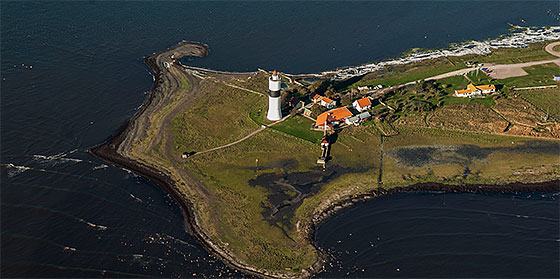
Ottenby Bird Observatory
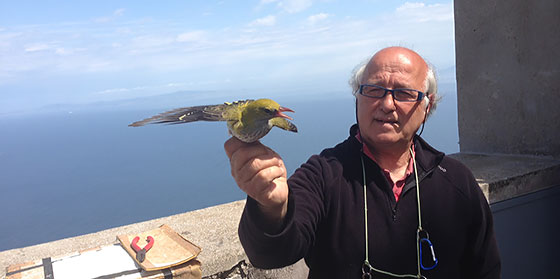
Since the early 1980s Italian ornithologists also work up here. Ornithologists at work: weighing, measuring, ringing and registering the trapped migratory birds – before they are soon set free again. Currently the Swedish ornithological activities on Capri are run by the Ottenby Bird Observatory on the Swedish Baltic island of Öland. Ottenby also studies the migratory birds in their winter quarters down in tropical Africa, currently in Nigeria.
Capri is thus a station halfway between the breeding grounds around the Baltic Sea and the winter quarters south of the Sahara – but it is also centrally located in the Mediterranean winter quarters for the bird species that do not fly any farther south.